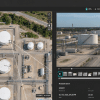
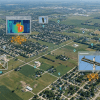
This week Percepto introduced Axion, a hardware-agnostic platform that gives critical infrastructure operators a current understanding of their assets and where to act first. Axion marks Percepto’s evolution into a software-first Physical AI company, building on 12 years of experience operating autonomous drones in critical infrastructure environments.
I joined Percepto as CEO to lead this next stage. Here is what it means, why we are doing it, and why this company is ready for it.
What Physical AI means for Percepto
Physical AI applies an understanding of real infrastructure to the work of inspecting and maintaining it. It learns from what drones, cameras, and sensors observe on actual assets, and it turns those observations into a current picture of asset condition. For operators, the goal is simple: nothing changes on their assets without them knowing first.
Every operator I talk to has more inspection data than they can use. Drone flights, thermal scans, sensor feeds, contractor reports. The data exists. The hard part is knowing which data matters today. Percepto has spent more than a decade solving that problem. Becoming software-first makes that capability available to far more operators.
The foundation we are building on
I have spent my career building companies where software meets the physical world, first in cybersecurity, then in IoT and Physical AI. When I looked at Percepto, I saw a company that had already done the hardest work.
The founders started in 2014 with a question many people considered unrealistic: could you inspect industrial sites with drones that fly themselves, with no pilot on site? They answered it. They built autonomous drones and docking stations, earned a nationwide FAA BVLOS waiver, and put their systems to work across power utilities, oil and gas facilities, and industrial sites for leading Fortune 500 organizations. Along the way, they built a team that understands infrastructure as well as it understands AI.
That foundation is what makes the next chapter possible. I am grateful to the founders for building it, and I am excited to grow and scale what they started.
Axion: where the next stage begins
For most of Percepto’s history, its AI was delivered through its own drones and stations. That made sense when collecting the data was the hardest problem. That is no longer the case.
Most operators already run drone programs, sensor networks, and inspection contracts. The bottleneck has now moved to review. Someone still has to look through thousands of images, connect them to the right asset, and decide what needs a crew. Inspection data without context is a stack of photos with no labels. With an aging workforce and fewer experienced reviewers, that bottleneck grows every year.
Axion opens our platform to all of that data. It ingests imagery and readings from supported third-party drones, fixed and mobile sensors, and existing inspection archives, and it organizes everything by asset. Then it puts more than 160 specialized AI models to work, trained on more than 100,000 hours of real-world autonomous inspection data.
Those models read equipment in context. Axion identifies a downed wire by its relationship to the components around it. It evaluates a thermal anomaly against how that asset should behave in current conditions. Each finding carries its inspection history and expert validation, so the team knows why it was flagged.
Operators can also ask questions in plain language. What did the last inspection find on this structure? What else is open at this site? The answers come from their own data.
From day one, a team can bring the inspection data it already has and see which assets need attention first.
Why software first
In every market I have worked in, I have learned there is no silver bullet. Infrastructure is no exception. Every operator has a different mix of assets, equipment, and service providers, and each has invested real money in that mix. Asking them to start over is asking too much.
A software-first approach meets operators where they are. They start with what they have. Where they need more frequent coverage, our Ranger drones and Harbor stations, supported by managed remote operations, add fresh data to Axion. Our hardware remains a core part of the business. It is now one of several ways into the platform.
What comes next
Until now, growth depended on how many drones and stations could be deployed. With Axion, any operator with inspection data can put Percepto’s AI to work, with each new data source giving the models more of the real world to learn from. Ranger drones and Harbor stations will continue to supply fresh data wherever operators need frequent coverage, and Axion is where the company scales.
Over the coming year, partnering with our customers in the field, we will expand the assets and use cases Axion covers, connect more data sources, and build further into the workflows that maintenance and reliability teams already run. We are also consolidating engineering, manufacturing, and assembly in the United States, alongside our existing U.S. remote operations, and building the team to bring this platform to many more operators.